Dandelion Wine is a Whimsical Slapstick Combat Game for Mobile Audiences, developed in Unity with a 30-person multidisciplinary game team as a year-long advanced game project published by USC Games.
The game’s narrative draws inspiration from Bacchus, the Roman god of wine, his followers, and their wild revelries. Players take on the role of a parasitic wine, building a cult of wine-loving devotees to humorously challenge the divine order in this party-themed adventure.
The game uses liquid physics, ragdoll physics, and the mobile horoscope to imitate intoxication while using drunk behavior as physical comedy.
Tools
Unity, Maya, Figma, Adobe Creative Suite
Time
May 2023 – May 2024, 1 Year
Role
UI/UX Designer
Team Size
30-Person Dev Team
Key Contributions
Led the UI/UX design team in the development of an immersive and user-friendly interface, ensuring an intuitive and visually appealing experience for players.
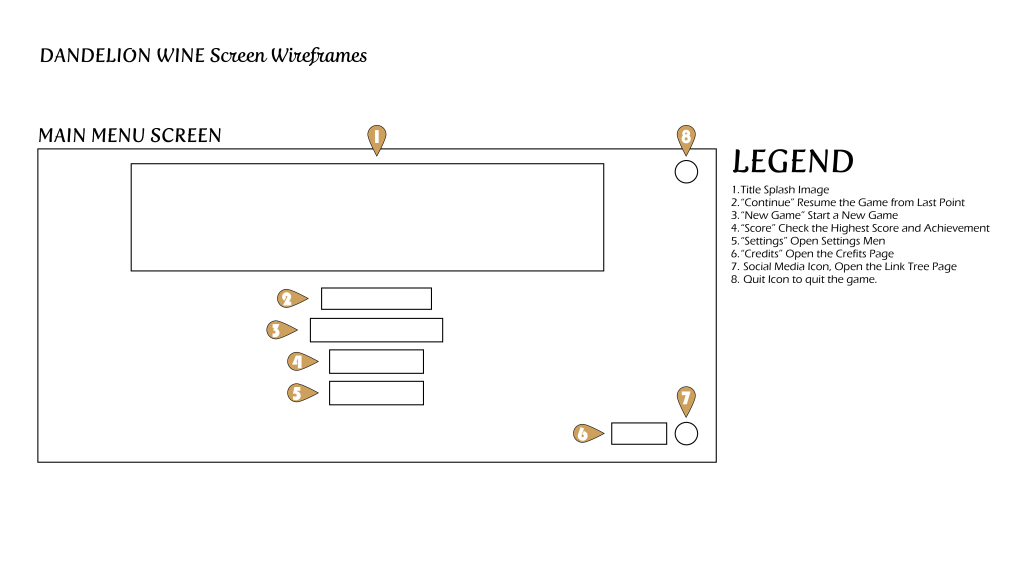
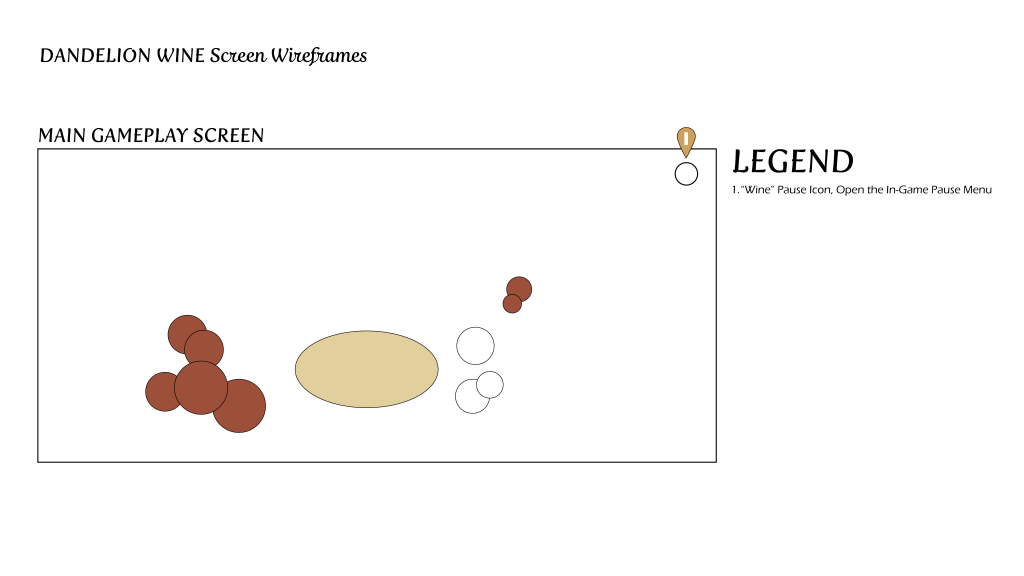
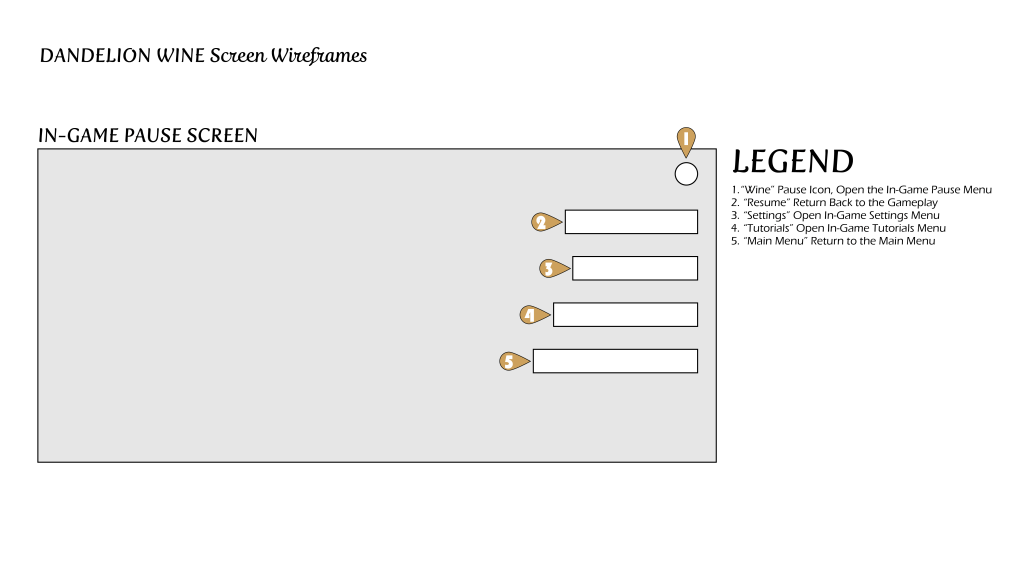
Crafted mobile wireframes, prototypes, and user flows in Figma, focusing on creating a clear and engaging layout to enhance player navigation and interaction.
Collaborated closely with game designers and artists to align the visual and interactive elements with the game’s overall aesthetic and gameplay mechanics.
Actively participated in playtesting sessions with more than 50 playtesters, collaborating closely with the usability team to identify and address user experience challenges.
Utilized systematic and data-driven approach to conduct comprehensive research and develop a diverse range of alternative solutions for further iterative improvements.
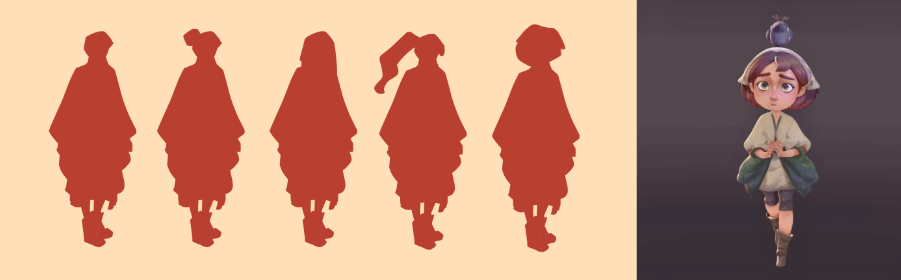
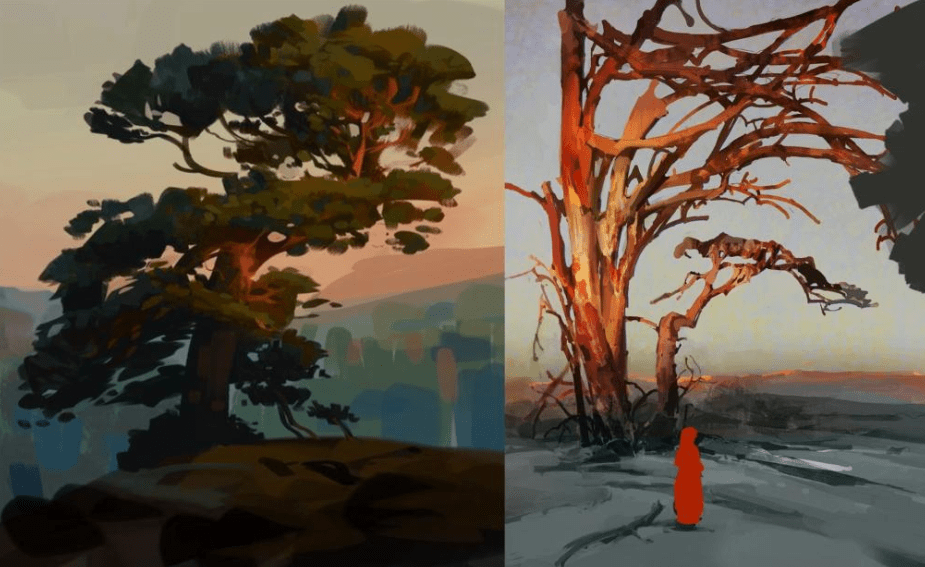
Color is extremely important to the game because it visualizes which folk are intoxicated by Dandelion Wine (light gold) and which are fighting for their god (red). “Red v. Light Gold” theme. Models are low-poly with hard edges and semi-realistic proportions. Textures have 0% smoothness for a matt finish.
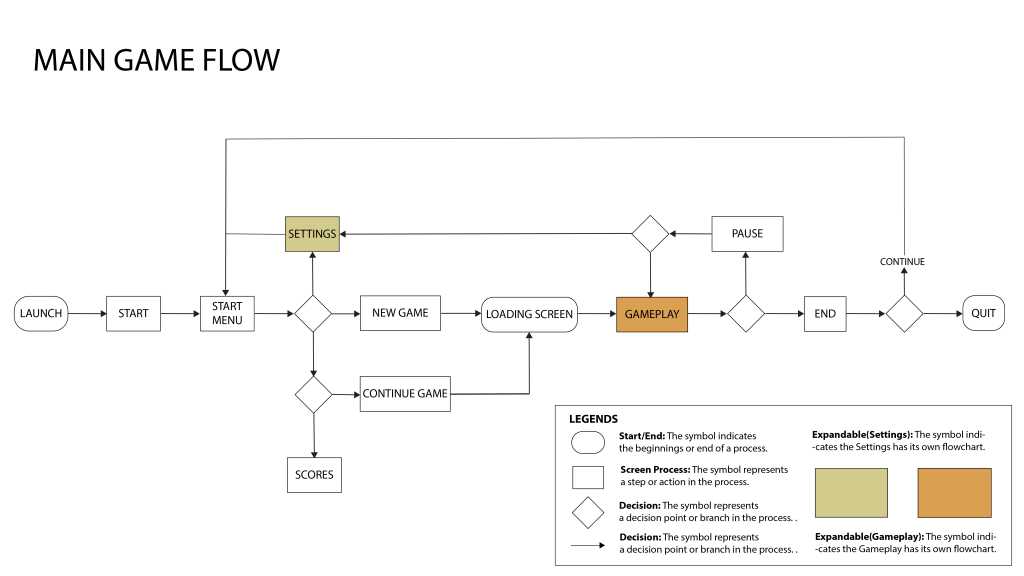
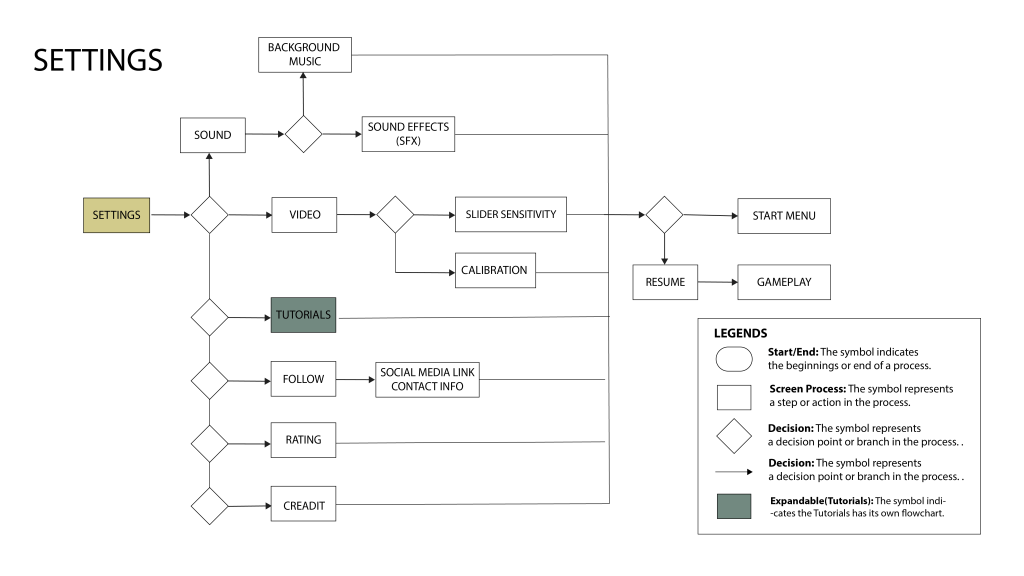
Game DiagramUnderstand the Flow and where UI is Needed
USABILITY TESTING & ITERATIONS
One piece of feedback we observed concerns the differentiation between first-time and returning players. A crucial consideration is strategically placing tutorials for new players while ensuring they do not impede the flow for continuous players. This considers two parts. One is whether tutorials should be integrated within the gameplay itself or set apart as a distinct instruction segment. The second is for the returning players: How can they easily access tutorial reminders, if needed, without having to go through all the tutorials again?
The game heavily relies on tutorials for players to learn the game’s combat system and on narratives to learn the settings and gain motivation. Some playtesters reflected that they wanted to better understand their actions through the storytelling aspect. And throughout iterations, the game is now using voice-over to explain to players the game’s settings. How scripts and subtitles can supplement the audio aspect and how they are presented is vital for enhancing the player’s experience without compromising gameplay fluidity.
Our design goal is to maintain a minimalist in-game UI, However, this presents a challenge in clearly conveying game instructions. This has constantly been brought up in playtests, some of the specific concerns include:
Clarity in possession mechanics: One of the core game mechanics is players’ ability to possess others. Currently, the UI lacks clear indicators of the time required for possession, and the possession animation also remains constant without any change to indicate the possession has been completed, leading to player confusion about when to release the possession button. The needs to be further addressed with the design.
Directional Navigation and Movement: Players control their “avatar” by tilting their phone for directions and movement, but playtesters have reported difficulty in discerning direction, impacting their ability to navigate and engage in combat effectively. There’s the need to introduce UI elements like directional indicators and possibly an arena map to aid navigation while still adhering to our minimalist design philosophy.
To address the issues with possession mechanics and directional navigation, we propose a combination of audio and visual feedback enhancements that maintain the minimalist design philosophy while improving player clarity.
We integrated voice acting cues and dynamic VFX, such as a progressively intensifying glow around the possessed target or a shrinking timer ring, to clearly indicate the possession’s progress and completion. This ensures players know precisely when to release the possession button without relying on additional UI clutter.
We also focus on audio cues and subtitles to provide quick, clear guidance on where to go next or the current mission objective. Subtle directional voice prompts, paired with concise on-screen subtitles, will offer immediate feedback without overwhelming the player.








 Yvette Fu | 傅鱼泓